Here's the info I need burned to CD for the midterm:
Logo - 15 designs
Logo - final choice
Sierra Nevada Review Cover
Poster Design
Writing assignments:
Obama "O" Response
Poster Artist Paper
Shepard Fairey "Obey Plagiarist" Response
DON'T FORGET – DON'T BE LATE THIS THURS:
We're going on a field trip, don't get left behind.
The only homework over break is for you to find a well-designed wine label. Post a picture of it to the blog.
Wednesday, March 13, 2013

Wednesday, February 27, 2013
Poster & Reading Assignment
At the beginning of next Tuesday's class, your finished poster design is due. Also, I want you to write a series of short responses to some questions, in reaction to an online reading assignment. We'll also look at a handful of links in class:
Milton Glaser critiques Shepard Fairey.
Milton Glaser on referencing Marcel Duchamp and Islamic Painting motifs in his Dylan poster.
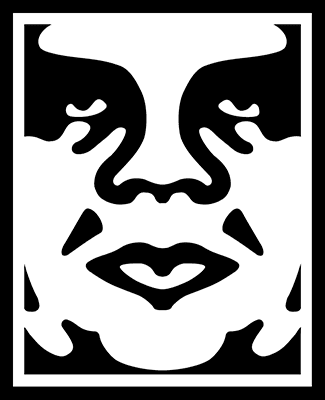
Here's the article on Shepard Fairey for you to read & respond to:
Obey Plagiarist Shepard Fairey, by Mark Vallen
Please answer the following questions, and print out your answers to hand in on Tuesday's class:
1. Vallen suggests Fairey has no demonstrable drawing ability, calling his art "machine art that any second-rate art student could produce." Is this an accurate appraisal of Fairey's style? Is it a relevant critique? Explain why or why not, in each case.
2. Vallen suggests that Lichtenstein's appropriation of comic strip imagery is valid, while Fairey's is not. What is the distinction he draws between the two artists? And do you think it's a valid distinction?
3. Vallen claims that the rationale behind Fairey's "Obey Giant" campaign -- to "stimulate curiosity and bring people to question both the campaign and their relationship with their surroundings - because people are not used to seeing advertisements or propaganda for which the motive is not obvious" -- is "pointless twaddle." Does he have a point, or is this in fact a decent rationale? Why?
4. Did Fairey have any sort of responsibility to recognize the skull image from the "defiant since 89" T-shirt as an SS Skull? Why?
5. Was the use of the Koloman Moser figure for the "Obey Propaganda" poster appropriate? Did Fairey make the image his own, or does it stand too much in the shadow of the original image?
6. Is Fairey's addition of an "Obey" logo to a Black Panther's beret an act of commentary, appropriation, or something else? What does the addition of the "Obey" logo do to transform the meaning of the original image?
7. What do you think Fairey's transformation of Rupert Garcia's "Down with the Whiteness" poster ultimately means?
8. Should Fairey have issued an apology to Rene Mederos, for the use of his poster image on a T-shirt?
9. Do you think that Fairey's use of Gary Grimshaw's winged panther image violates the spirit in which it was created for the "public domain?" Grimshaw says as much: "It is an icon that people can identify with and organize around, and thus must be free of copyright restrictions and onerous ownership. That is the spirit in which the image was created. The commercial exploitation of this image is not strictly criminal because of its public domain intent, but it reeks of the very mean spirit that the image was meant to oppose." Does Grimshaw have a point, or is Fairey completely in the clear in this case?
10. Towards his conclusion, Vallen states: "The expropriation and reuse of images in art has today reached soaring heights, but that relentless mining and distortion of history will turn out to be detrimental for art, leaving it hollowed-out and meaningless in the process. When I refer to "mining" in this case I mean the hasty examination and extraction of information from our collective past as performed by individuals who do not fully comprehend it. That is precisely what Fairey is guilty of, utilizing historic images simply because he "likes" them, and not because he has any grasp of their significance as objects of art or history." Is this a vlid critique of Fairey's art? What responsibility does the artist have to the history and social context of art the imagery he/she chooses to appropriate, if any?
Milton Glaser critiques Shepard Fairey.
Milton Glaser on referencing Marcel Duchamp and Islamic Painting motifs in his Dylan poster.

Here's the article on Shepard Fairey for you to read & respond to:
Obey Plagiarist Shepard Fairey, by Mark Vallen
Please answer the following questions, and print out your answers to hand in on Tuesday's class:
1. Vallen suggests Fairey has no demonstrable drawing ability, calling his art "machine art that any second-rate art student could produce." Is this an accurate appraisal of Fairey's style? Is it a relevant critique? Explain why or why not, in each case.
2. Vallen suggests that Lichtenstein's appropriation of comic strip imagery is valid, while Fairey's is not. What is the distinction he draws between the two artists? And do you think it's a valid distinction?
3. Vallen claims that the rationale behind Fairey's "Obey Giant" campaign -- to "stimulate curiosity and bring people to question both the campaign and their relationship with their surroundings - because people are not used to seeing advertisements or propaganda for which the motive is not obvious" -- is "pointless twaddle." Does he have a point, or is this in fact a decent rationale? Why?
4. Did Fairey have any sort of responsibility to recognize the skull image from the "defiant since 89" T-shirt as an SS Skull? Why?
5. Was the use of the Koloman Moser figure for the "Obey Propaganda" poster appropriate? Did Fairey make the image his own, or does it stand too much in the shadow of the original image?
6. Is Fairey's addition of an "Obey" logo to a Black Panther's beret an act of commentary, appropriation, or something else? What does the addition of the "Obey" logo do to transform the meaning of the original image?
7. What do you think Fairey's transformation of Rupert Garcia's "Down with the Whiteness" poster ultimately means?
8. Should Fairey have issued an apology to Rene Mederos, for the use of his poster image on a T-shirt?
9. Do you think that Fairey's use of Gary Grimshaw's winged panther image violates the spirit in which it was created for the "public domain?" Grimshaw says as much: "It is an icon that people can identify with and organize around, and thus must be free of copyright restrictions and onerous ownership. That is the spirit in which the image was created. The commercial exploitation of this image is not strictly criminal because of its public domain intent, but it reeks of the very mean spirit that the image was meant to oppose." Does Grimshaw have a point, or is Fairey completely in the clear in this case?
10. Towards his conclusion, Vallen states: "The expropriation and reuse of images in art has today reached soaring heights, but that relentless mining and distortion of history will turn out to be detrimental for art, leaving it hollowed-out and meaningless in the process. When I refer to "mining" in this case I mean the hasty examination and extraction of information from our collective past as performed by individuals who do not fully comprehend it. That is precisely what Fairey is guilty of, utilizing historic images simply because he "likes" them, and not because he has any grasp of their significance as objects of art or history." Is this a vlid critique of Fairey's art? What responsibility does the artist have to the history and social context of art the imagery he/she chooses to appropriate, if any?
Tuesday, February 26, 2013
Thursday, February 21, 2013
Due Tuesday, 2/26
At the beginning of Tuesday's class, you need to have a sketch of your idea for the poster design. This can just be a pencil sketch. The final design can be illustrated, or it can be photography-driven, or it ca use collage - though the images should be in the public domain, or at least tweaked enough that they could be defended on a "fair use" basis. But come to class armed with an image/idea.
In preparation, please listen to the bands in the "BAND LINKS" column to the right. Street Joy and Tasty Treat will have more information regarding venues and dates - so if you want to set integrating the text into the design as a good "design problem," pick one of those. Otherwise, let the music guide you - pick the band whose sound you respond to the most, or which gives you the strongest mental images.
In preparation, please listen to the bands in the "BAND LINKS" column to the right. Street Joy and Tasty Treat will have more information regarding venues and dates - so if you want to set integrating the text into the design as a good "design problem," pick one of those. Otherwise, let the music guide you - pick the band whose sound you respond to the most, or which gives you the strongest mental images.
Thursday, February 14, 2013
Poster Presentation

This assignment is due at the beginning of class on Tuesday, 2/19.
As a prelude to our poster project, everyone is going to do an in-class presentation on a poster artist or a poster movement, so that we get exposed to a variety of poster styles and approaches. Present images in powerpoint, or as an image slideshow. Everyone will have 10 minutes to present and take questions. In addition to the presentation, you'll need to print out and hand in a minimum three page paper (double-spaced), which will serve as an outline of your presentation. That's three written pages -- not one written page and two pages of pasted-in images. If you want to include images as supplements to the three page paper, feel free. Include a fourth page that lays out your bibliography. If you can get your hands on some actual books to bring to class to show around, please do. There are a few poster art books in Prim Library.
In your presentation and paper, give a description of the artist/movement, and what the social context for the work was. Who was the audience for the posters? What sorts of messages were they trying to convey? Who paid for the posters to be made (if relevant -- some posters, like the May '68 posters, were not commissioned)? What made the posters interesting or unique? What made them stand out? In addition to giving some biographical and social context, pick out several images that interest you, and critique them in some detail. What sorts of formal decisions make the posters "work" (or fail to work, if you think they're bad posters?)
Single out at least two posters, and write about the following elements in each poster:
Describe the qualities of the fonts, and how they are used
Describe the use of color
Describe the use of imagery
Write about the balance between text and image, and the overall composition
Describe the communicative impact of the poster
You could break down the paper in this way:
1 page of personal/cultural background to the artist/movement
1 page dedicated to a specific poster
1 page dedicated to another specific poster
1 bibliography page
Below is a list of poster artists or poster movements to choose from. Plug the name or prase into Google images and pick something that appeals to you visually. Once you've chosen, write your choice in a "comment" to this blog post -- don't pick artists/movements that have already been "claimed" in the comments section (this is first-come, first-serve). You're not restricted to this list -- if you'd like to do a presentation on some other poster artist, just name them in the comments section.
This should go without saying, but don't plagiarize. You'll get caught, and that'll suck.
The Beautiful Angle Poster Project
Art Chantry
Brian Chippendale
Shepard Fairey
Rupert Garcia (chicano movement posters)
Eugène Grasset
Gary Grimshaw (psychedelic 60s posters)
Miss Amy Jo
Judge (judgeworks.com)
Frank Kozik
Strawberry Luna
May 1968 Posters (1968 Paris Uprising, 1968 Street Posters)
Rene Mederos (and Cuban poster artists of the 1960s)
Victor Moscoco
Alphonse Mucha (and Art Nouveau)
Polish movie posters (esp. Jan Lenica)
Print Mafia
Soviet Movie Posters (esp. The Stenberg Brothers)
Soviet propaganda Posters
Théophile Steinlen
Henri de Toulouse-Lautrec
US WW2 propaganda posters
Leonetto Cappiello
Tyler Stout
(The top image is by Bay Area Chicana artist Ester Hernandez)
Tuesday, February 12, 2013
Dimensions for Sierra Nevada Review cover
If you're only doing a front cover:
8.5" Tall X 5.5" Wide (add a 1/8" bleed - set the bleed in File > Document Setup as .125")
Wrap-around cover:
8.5" Tall X 11.25" wide (this includes a 1/4" spine) - also add a 1/8" bleed.
The only text that needs to appear on the cover is:
Sierra Nevada Review
2013
8.5" Tall X 5.5" Wide (add a 1/8" bleed - set the bleed in File > Document Setup as .125")
Wrap-around cover:
8.5" Tall X 11.25" wide (this includes a 1/4" spine) - also add a 1/8" bleed.
The only text that needs to appear on the cover is:
Sierra Nevada Review
2013
Thursday, February 7, 2013
Poetry Magazine References
Past covers of the Sierra Nevada Review:
http://www.sierranevada.edu/assets/SierraNevadaReview2012.jpg
http://www.sierranevada.edu/academics/humanities-social-sciences/english/the-sierra-nevada-review/poetry/
Covers of POETRY Magazine:
http://www.flickr.com/photos/89973526@N00/sets/72157604919202281/
http://www.sierranevada.edu/assets/SierraNevadaReview2012.jpg

http://www.sierranevada.edu/academics/humanities-social-sciences/english/the-sierra-nevada-review/poetry/
Covers of POETRY Magazine:
http://www.flickr.com/photos/89973526@N00/sets/72157604919202281/
Subscribe to:
Posts (Atom)